



Security dogs have long been recognised as one of the most effective deterrents in the protection industry. Their heightened senses, speed of response, and natural presence create a security asset that far surpasses many traditional methods. But not all security dogs perform the same role. Within professional canine security, two key categories exist: general purpose dogs and detection dogs.
While both types play vital roles in keeping people, property, and events safe, their training, responsibilities, and operational use are very different. Understanding these differences is essential for businesses, event organisers, and high-risk environments looking to choose the right type of canine support.
In this guide, we break down the key distinctions between general-purpose and detection dogs, how they are trained, when they should be deployed, and the value they bring to modern security operations.
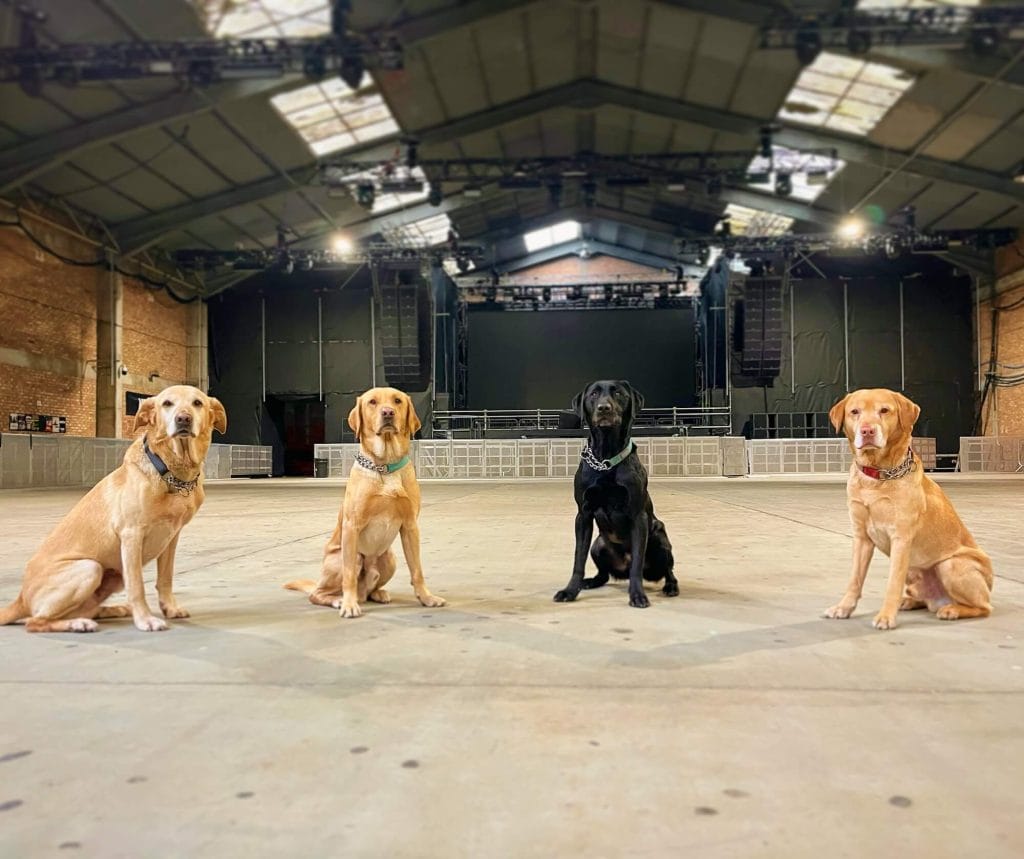
The Role of Canine Security in Modern Protection
Dogs have been used in security and law enforcement for decades, and with good reason. Their enhanced senses provide capabilities that simply cannot be replicated by humans or even advanced technology.
A professional security dog can:
- Detect threats before they become visible
- Respond rapidly to intruders
- Provide immediate deterrence
- Support handlers in high-risk situations
- Search large or complex areas quickly
- Identify substances or items that humans cannot
Because of these extraordinary abilities, canine units play a major role in safeguarding construction sites, warehouses, events, airports, public spaces, and private premises.
Within this field, two specialist categories have emerged: General Purpose Dogs (GPDs) and Detection Dogs. Each type offers unique benefits depending on the security requirement.
What Are General Purpose Security Dogs?
General-purpose security dogs, often referred to as GPDs or patrol dogs, are trained to support licensed handlers across a broad range of operational tasks. Their role centres on patrolling, protection, and deterrence.
These dogs work alongside SIA-licensed handlers to provide a proactive security presence. They are used to respond to incidents, control crowds, and assist in the safe apprehension of intruders.
Key Responsibilities of General Purpose Dogs
General-purpose security dogs are typically deployed to:
- Patrol sites such as warehouses, construction areas, business parks, and vacant properties
- Guard high-value or high-risk locations
- Provide visible deterrence against intruders, trespassers, and anti-social behaviour
- Assist in crowd control and public safety at events
- Support handlers during confrontational or high-risk incidents
- Track and locate individuals in large areas (depending on training)
The presence of a GPD reduces the likelihood of crime dramatically. Simply being seen is often enough to deter potential offenders.
How General Purpose Dogs Are Trained
General-purpose dogs undergo extensive and ongoing training to ensure they can perform safely and effectively. They are trained in:
- Obedience
- Controlled aggression
- Handler protection
- Area searches
- Building searches
- Patrolling techniques
- Crowd management support
- Bite work (strictly controlled and regulated)
Importantly, training emphasises discipline, control, and appropriate response. These dogs must be reliable, predictable, and able to follow commands instantly in high-pressure situations.
What Are Detection Dogs?
Detection dogs are highly specialised animals trained to locate and identify specific substances or items that humans are unable to detect efficiently.
These dogs work by using their extraordinary sense of smell, often up to 50 times more powerful than that of a human, to identify scents hidden within objects, bags, vehicles, or buildings.
Types of Detection Dogs
There are several categories of detection dogs, including:
- Drug Detection Dogs: Trained to identify illegal substances such as cannabis, cocaine, heroin, and other controlled drugs.
- Explosive Detection Dogs: Used in airports, large events, public transport hubs, and high-risk venues to identify explosive materials.
- Contraband Detection Dogs: Trained to detect items such as tobacco, firearms, currency, and other restricted goods.
Some dogs are trained in multiple detection disciplines, while others specialise in one specific area, depending on operational needs.
How Detection Dogs Are Trained
Detection dogs receive some of the most advanced training in the canine security world. They undergo rigorous conditioning to ensure accuracy, consistency, and reliability.
Their training includes:
- Odour recognition
- Search patterns
- Passive or active indication (depending on task)
- Environmental conditioning (airport noise, crowds, confined spaces)
- Working in high-pressure or distracting environments
- Maintaining focus for long periods
The precision these dogs display makes them invaluable in security settings where speed and accuracy are essential.
Key Differences Between General Purpose and Detection Dogs
Although both types of dogs play vital security roles, their operational focus differs greatly.
1. Purpose
- General Purpose Dogs: Trained to deter, patrol, and assist in protection.
- Detection Dogs: Trained specifically to locate substances or contraband.
2. Training Focus
- General Purpose Dogs: Obedience, protection, controlled aggression, patrol work.
- Detection Dogs: Scent detection, search techniques, and precision indications.
3. Operational Use
- General Purpose Dogs: Used for guarding, patrolling, crowd control, and intruder apprehension.
- Detection Dogs: Used for searches at events, airports, warehouses, distribution sites, and secure facilities.
4. Risk Level
- General Purpose Dogs: Often deployed in physically confrontational or high-risk situations.
- Detection Dogs: Typically deployed in controlled environments requiring precision and calm behaviour.
5. Visual Deterrence
- General Purpose Dogs: Highly visible and used specifically to deter intruders.
- Detection Dogs: Often blend into crowds or work discreetly.
When to Use General Purpose Dogs
General-purpose dogs are ideal for:
- Construction sites
- Vacant buildings
- Industrial estates
- Large outdoor events
- Car parks
- Warehouses
- Sites with a history of intrusion or theft
- Areas affected by anti-social behaviour
Their presence alone can prevent criminal activity before it begins.
When to Use Detection Dogs
Detection dogs are essential for:
- Music festivals
- Sporting events
- Airports
- Transport hubs
- Distribution centres
- Warehouses
- High-risk public gatherings
- Border security
- Corporate events
They improve safety, compliance, and risk management by preventing substances or dangerous items from entering secure environments.
Why Professional Handlers Matter
Both general-purpose and detection dogs must work exclusively with trained, certified handlers.
At CSM Security, all handlers are experienced, accredited, and trained to the highest operational standards. This ensures:
- Full legal compliance
- Safe and controlled deployment
- Reliable performance in all environments
- Professional communication and risk awareness
- Effective integration with wider security teams
A dog is only as effective as the handler supporting it, which is why professional expertise is essential in every deployment.
Choosing the Right Dog for Your Security Needs
The best choice depends on your operational environment and objectives:
- Need deterrence and patrol coverage?
General Purpose Dog - Need to identify substances, explosives, or contraband?
Detection Dog - Running a large event?
Both may be needed
Many security strategies combine both types for maximum protection.
Strengthening Your Security with Professional Canine Support
Whether you’re protecting a business premises, running a high-risk event, or managing a large industrial site, canine security provides unmatched protection that combines speed, accuracy, and deterrence.
- General-purpose dogs offer proactive patrol and protection.
- Detection dogs offer precision and early prevention.
- Together, they offer a powerful, versatile security solution.
Contact CSM Security for Professional Canine Security Services
At CSM Security, we provide highly trained general purpose security dogs and detection dogs across the UK. Our canine teams are fully regulated, professionally handled, and trained to deliver exceptional protection in any environment. Call 01745 343224 or email info@csmsecurity.co.uk. Speak to our experts today to discuss your security needs and receive a tailored canine security solution.