


Event security has changed dramatically over the years. Gone are the days when security meant heavy barriers, intimidating guards, and long queues that frustrated guests before they even entered a venue. Today, successful event security is about striking the perfect balance between keeping people safe and ensuring they enjoy a smooth, welcoming, and memorable experience.
Whether you’re organising a music festival, corporate function, sporting event, wedding, or community gathering, security plays a central role in how your event is perceived. If security feels too strict, guests may feel uncomfortable or restricted. If it feels too relaxed, risks increase, and safety can be compromised. The challenge lies in delivering strong protection while maintaining a friendly, professional atmosphere.
Balancing security and guest experience is not about choosing one over the other. It is about designing a security strategy that improves your event, reassures attendees, and allows everything to run seamlessly behind the scenes.
Why Security and Guest Experience Must Work Together
Security and guest experience are often seen as opposing forces, but in reality, they should support each other. A well-secured event feels organised, calm, and professional. Guests are more likely to relax and enjoy themselves when they feel safe and know there are trained professionals in control.
Poor security planning can cause:
- Long entry queues
- Confusion and congestion
- Unnecessary confrontation
- A negative first impression
- Increased risk of incidents
On the other hand, effective security planning results in:
- Smooth entry and exit processes
- Clear communication
- A calm and controlled environment
- Confidence from guests and staff
- A positive reputation for future events
Security should never feel like an obstacle. It should feel like support.
Start With a Thorough Risk Assessment
The foundation of any successful security plan is a detailed risk assessment. This allows organisers to understand the specific risks associated with their event and put appropriate measures in place without overcomplicating things.
A professional risk assessment considers:
- The type of event and its purpose
- Expected attendance numbers
- Demographics of the audience
- Alcohol availability
- Location and layout
- Previous incident history
- High-profile guests or performers
- Time of day and duration
By identifying risks early, security measures can be tailored. This prevents over-securing low-risk areas or under-securing high-risk ones, which is essential for maintaining a positive guest experience.
The Importance of First Impressions
The first interaction a guest has with your event is often with security staff. This moment shapes their perception of the entire experience.
Professional event security should be:
- Approachable
- Polite
- Calm
- Well-presented
- Confident
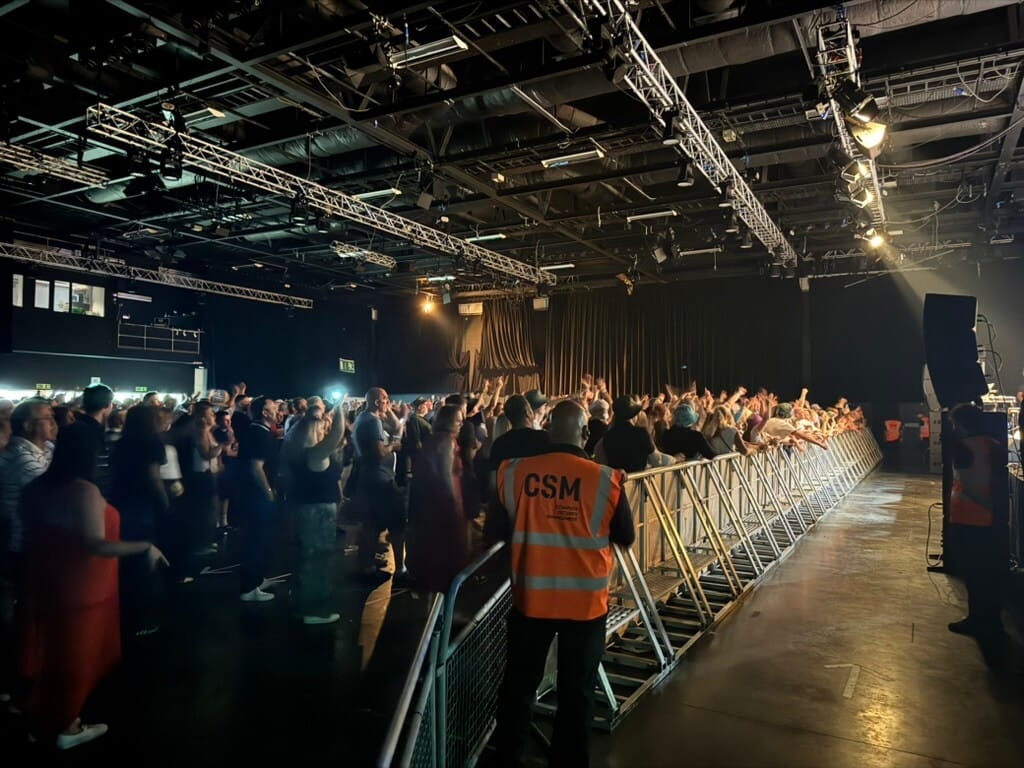
Uniformed security staff act as both protectors and ambassadors. A friendly greeting, clear instructions, and respectful communication can instantly put guests at ease while reinforcing that safety is taken seriously.
Using Visible Security Without Intimidation
Visible security is one of the most effective deterrents to antisocial behaviour and crime. However, visibility must be balanced with approachability.
Uniformed officers, CCTV towers, stewards, and canine teams should look professional, not aggressive. Their presence should reassure guests rather than make them feel uneasy.
When visible security is delivered professionally, it communicates:
- Organisation
- Authority
- Preparedness
- Safety
It creates a secure environment that feels controlled, not restricted.
Streamlining Entry and Exit Points
Entry points are where security and guest experience most often collide. Long queues and confusion can quickly frustrate attendees.
To improve the balance:
- Use multiple entry lanes
- Clearly signpost queues
- Separate ticket checks from security searches
- Employ detection dogs where appropriate to speed up screening
- Train staff to communicate clearly and calmly
When entry is efficient and respectful, guests feel welcomed rather than processed.
Crowd Management That Feels Natural
Crowd management is essential for safety, but it should never feel forceful or intrusive.
Effective crowd management relies on:
- Clear signage
- Open walkways
- Well-positioned stewards
- Calm verbal guidance
- Proactive movement planning
Rather than reacting to problems, good security teams anticipate congestion and adjust flow naturally, preventing tension before it develops.
The Role of Detection Dogs in Guest Experience
Detection dogs are increasingly used at festivals and large-scale events. While their purpose is serious, they can actually enhance guest experience when deployed correctly.
Detection dogs:
- Reduce the need for intrusive searches
- Speed up entry processes
- Deter prohibited items
- Improve compliance
- Increase overall safety
When handled professionally, they are calm, controlled, and non-threatening. Many guests even find them reassuring and interesting, rather than intimidating.
CCTV Towers and Discreet Monitoring
CCTV towers provide strong visible security without interfering with guest enjoyment. They monitor large areas without direct interaction and act as a powerful deterrent.
Their benefits include:
- Continuous site oversight
- Quick identification of issues
- Evidence for investigations
- Support for emergency response
Because they work quietly in the background, they support safety without affecting the atmosphere.
Training Security Staff in Customer Service
Security professionals at events must be trained in customer service as well as safety procedures. The way staff speak to guests, respond to questions, and handle minor issues has a huge impact on the overall experience.
Security teams should be trained to:
- De-escalate situations calmly
- Provide directions and information
- Communicate clearly
- Remain respectful under pressure
- Support vulnerable guests
This turns security into a support service rather than a barrier.
Managing Alcohol-Related Risks
Alcohol is often part of events and can increase risk if not managed carefully. Security teams play a vital role in maintaining safety without disrupting enjoyment.
This includes:
- Monitoring intoxication levels
- Supporting bar staff
- Handling conflicts calmly
- Preventing disorder before it escalates
A professional approach ensures guests continue enjoying themselves safely.
Supporting Vulnerable Guests
A balanced security strategy considers the needs of vulnerable guests, including:
- Children
- Elderly attendees
- Disabled visitors
- Lone individuals
Security staff should be trained to recognise vulnerability and respond with care, ensuring everyone feels protected and respected.
Communication Is Key
Guests respond better to security measures when they understand why they exist. Clear signage and polite explanations make a huge difference.
For example:
- “For your safety, bags are checked at entry.”
- “Our canine teams are here to help keep everyone safe.”
Transparency builds trust.
Coordination With Event Organisers
Security teams should work closely with organisers to ensure alignment. This includes:
- Understanding event goals
- Knowing the schedule
- Anticipating peak times
- Adjusting coverage as needed
This coordination ensures security supports the event rather than disrupting it.
Technology That Supports Experience
Modern event security uses technology to improve efficiency and safety without creating friction.
Examples include:
- Radio communication systems
- Live CCTV monitoring
- Mobile reporting tools
- Integrated alarm response
Technology allows faster response without unnecessary visibility or disruption.
Why Professional Event Security Makes the Difference
Balancing security and guest experience is not something that can be improvised. It requires training, planning, and experience.
Professional event security providers understand:
- Crowd psychology
- Risk management
- Customer service
- Legal responsibilities
- Operational efficiency
This expertise ensures events are safe, compliant, and enjoyable.
The Long-Term Value of a Balanced Approach
When guests leave an event feeling safe, respected, and welcomed, they are far more likely to return and recommend it to others.
A balanced security strategy protects:
- Your guests
- Your staff
- Your reputation
- Your future events
Security done well becomes invisible in the best possible way.
Creating Safer, Better Events
The best event security is not the most obvious or the most restrictive. It is the most thoughtful. By planning carefully, training staff properly, and using professional security services, organisers can create an environment where safety and enjoyment work together seamlessly.
Security should never overshadow the event. It should support it.
Speak to CSM Security About Event Security
At CSM Security, we specialise in delivering professional event security that protects your guests while enhancing their experience. Our trained teams understand how to combine safety, discretion, and customer service to create secure, welcoming environments for events of all sizes.
Call 01745 343224 or email info@csmsecurity.co.uk today to discuss how we can help you balance security and guest experience at your next event.